Reiki is a gentle, Japanese energy healing practice that promotes deep relaxation, stress reduction, emotional balance, and a sense of peace and well-being. At Holistic Healing & Wellness in New Boston, Michigan, Reiki sessions are offered by Lezlie Cebulski, N.D., Usui Reiki Ryoho Master Teacher, who incorporates traditional Reiki techniques into her holistic approach to body, mind, and spirit.
Reiki may be experienced as a stand-alone treatment or combined with other complementary wellness techniques, including aromatherapy, EFT Tapping, chakra balancing, meditation, and energy medicine.
Whether you are navigating emotional stress, experiencing physical tension, seeking spiritual renewal, or simply wanting time to relax and reconnect with yourself, Reiki offers a peaceful opportunity for restoration.
What Is Reiki Energy Healing?
Reiki is a Japanese energy healing practice based on the concept of universal life-force energy.
The word Reiki combines two Japanese terms:
- Rei: Often interpreted within Reiki traditions as universal wisdom, spiritual consciousness, or a higher guiding intelligence.
- Ki: Life-force energy, comparable to the concept of Qi in traditional Chinese medicine or Prana in Indian healing traditions.
Together, Reiki is commonly described as spiritually guided life-force energy.
Within traditional Reiki philosophy, this vital energy flows through and around all living beings.
When life-force energy is balanced and flowing harmoniously, it is believed to support vitality, emotional equilibrium, and spiritual well-being.
When energy becomes depleted, stagnant, or disrupted, Reiki practitioners believe that individuals may experience greater stress, tension, or a sense of imbalance.
Reiki treatments are intended to encourage the natural flow of energy and restore harmony within the body’s subtle energy system.
Reiki is a spiritual and energetic wellness practice, and its proposed life-force energy mechanism has not been scientifically established.
How Does Reiki Work?
Understanding Life-Force Energy & Energetic Balance
Reiki practitioners work with the concept that the human body is surrounded and permeated by a subtle energy field.
This energy system is often discussed in connection with chakras, meridians, and other traditional energy medicine concepts.
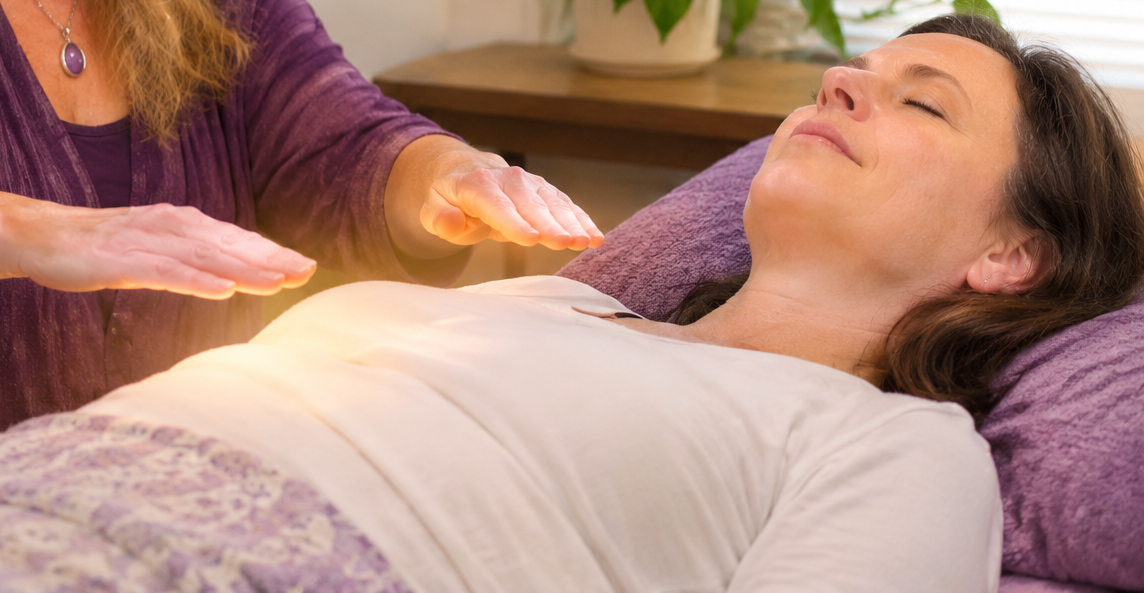
During a Reiki session, the practitioner gently places her hands on or slightly above selected areas of the client’s body.
According to Reiki tradition, universal life-force energy flows through the practitioner’s hands to support the recipient’s energetic balance.
The practitioner does not force or direct the energy through physical effort. Instead, Reiki is understood as a process of allowing spiritually guided energy to flow according to the recipient’s needs.
The experience is often described as gentle, peaceful, and deeply relaxing.
Many clients report sensations such as:
- Warmth or tingling.
- A gentle flowing or pulsing sensation.
- Deep physical relaxation.
- A feeling of lightness.
- Emotional release.
- Peacefulness and mental clarity.
- A renewed sense of balance and well-being.
Others simply experience quiet rest without noticeable physical sensations.
Every Reiki session is individual, and no particular sensation is required to benefit from the relaxation experience.
Benefits of Reiki for Stress Reduction & Emotional Wellness
Reiki is frequently incorporated into holistic wellness routines to encourage relaxation and support emotional well-being.
Deep Relaxation & Stress Relief
Reiki provides a quiet environment in which clients can release everyday tension and shift their attention away from ongoing demands.
The gentle nature of the treatment encourages physical stillness and a calmer state of mind.
Emotional Balance & Inner Peace
Reiki may be particularly appealing during periods of emotional overwhelm, grief, personal transition, or prolonged stress.
Clients often describe feeling calmer, more centered, and emotionally refreshed following a session.
Nervous System Relaxation
A peaceful Reiki session may encourage the body’s natural relaxation response, helping reduce feelings of tension and stress-related arousal.
Mind-Body Awareness
Reiki offers an opportunity to reconnect with physical sensations, breathing, and emotional experiences.
This awareness can complement other mind-body practices such as meditation, EFT Tapping, and gentle somatic exercises.
Spiritual Connection & Personal Renewal
For individuals who appreciate spiritual wellness practices, Reiki may provide an opportunity for reflection, personal intention, and a deeper sense of connection.
Reiki does not require adherence to any particular religion or spiritual belief.
Comfort During Difficult Life Experiences
Some individuals choose Reiki during periods of grief, illness, caregiving, emotional exhaustion, or major life changes.
The emphasis is on relaxation, comfort, and whole-person support rather than treating a specific medical condition.
The History of Usui Reiki Ryoho
Mikao Usui & the Origins of Modern Reiki
The system of Reiki most widely practiced today originated in Japan during the early twentieth century.
Mikao Usui (1865–1926) developed the healing system known as Usui Reiki Ryoho during the early 1920s.
Usui’s teachings emphasized spiritual development, meditation, ethical principles, and the cultivation of healing energy.
His approach combined hands-on energy practices with a philosophy of personal growth and harmonious living.
One of Usui’s important students was Chujiro Hayashi, who further developed Reiki teaching and treatment practices.
Hayashi subsequently taught Hawayo Takata, who became a Reiki Master in 1938 and played a major role in introducing and establishing Reiki in Hawaii and throughout the Western world.
This historical succession is central to the development of Western Usui Reiki.
Reiki Lineage: A Tradition Passed from Teacher to Student
Reiki traditions place considerable importance on lineage, the succession of teachers through whom practitioners receive their training and attunements.
Within Usui Reiki, a practitioner’s lineage traditionally traces back to Mikao Usui through successive Reiki Masters.
Reiki training commonly progresses through several levels:
Reiki I — First Degree
Introduces Reiki principles, self-treatment, basic hand positions, and hands-on energy practices.
Reiki II — Second Degree
Expands Reiki practice through traditional symbols, focused intention, and additional energy techniques.
Reiki Master & Teacher Training
Provides advanced training in Reiki practice, attunements, symbols, and the teaching of Reiki to others.
Individual training structures may vary by school and lineage.
Lezlie Cebulski’s Reiki Master Teacher Training & Lineage
Lezlie Cebulski, N.D., is a Usui Reiki Ryoho Reiki Master Teacher with training in traditional Reiki practices and advanced energy techniques.
Lezlie completed her earlier Reiki I and Reiki II training with Lisa Guyman.
In 2017, she completed Reiki Master Teacher training with Advanced Studies under Reiki Master Teacher Sue Burton-Hidalgo.
Her Reiki Master Teacher certificate documents a lineage within the Western Usui Reiki tradition, ultimately connecting through:
Mikao Usui → Chujiro Hayashi → Hawayo Takata → Subsequent Western Reiki Masters → Lezlie Cebulski
This lineage reflects the tradition of Reiki teachings being transmitted from teacher to student through formal training and attunements.
Lezlie combines her Reiki training with decades of experience in traditional naturopathy, aromatherapy, emotional wellness, and other complementary mind-body techniques.
What to Expect During a Reiki Session
A Reiki session is a peaceful, noninvasive experience designed to encourage relaxation and energetic balance.
Before Your Session
Lezlie may begin with a brief discussion of your wellness goals, current stressors, or areas where you would like additional support.
Some clients arrive with a particular intention, such as:
- Reducing stress and tension.
- Encouraging emotional balance.
- Supporting relaxation during grief or personal transitions.
- Feeling more grounded.
- Developing greater spiritual awareness.
- Enjoying quiet, restorative time.
Others simply wish to relax without focusing on a specific concern.
During Your Reiki Treatment
You will typically lie comfortably on a treatment table while remaining fully clothed.
Lezlie gently places her hands on or slightly above selected areas of the body.
Traditional Reiki hand positions may correspond to areas associated with the head, heart, abdomen, and other energy centers.
The treatment does not involve forceful manipulation or massage.
Clients may experience warmth, tingling, a feeling of flowing energy, or deep relaxation.
Some individuals become so relaxed that they drift into a light sleep.
After Your Reiki Session
Clients often describe feeling peaceful, refreshed, grounded, or emotionally lighter.
You may wish to take a few moments to rest, drink water, and reflect on your experience.
Lezlie can also suggest simple self-care practices to help maintain a sense of relaxation between appointments.
Reiki & Chakra Energy Balancing
Within many contemporary Reiki traditions, treatments may incorporate awareness of the body’s seven principal chakras.
Chakras are traditionally understood as subtle energy centers associated with particular physical regions, emotional themes, and spiritual qualities.
For example:
- Root Chakra: Grounding, security, and stability.
- Sacral Chakra: Creativity, emotional expression, and enjoyment.
- Solar Plexus Chakra: Confidence, personal power, and self-esteem.
- Heart Chakra: Compassion, love, forgiveness, and emotional connection.
- Throat Chakra: Communication, truth, and self-expression.
- Third Eye Chakra: Intuition, insight, and awareness.
- Crown Chakra: Spiritual connection and higher consciousness.
Lezlie may incorporate chakra-focused Reiki techniques, color visualization, or other energy-balancing methods according to a client’s preferences.
Learn More About Color Light Therapy & Chakra Energy Balancing
Reiki Combined with Other Holistic Wellness Techniques
One of the advantages of receiving Reiki at Holistic Healing & Wellness is the opportunity to incorporate it into a personalized mind-body wellness session.
Depending on individual interests and goals, Lezlie may combine Reiki with complementary practices.
Reiki & Aromatherapy
Essential oils may be selected to complement the emotional intention of a Reiki session.
Aromatherapy can enhance the sensory experience and help create a peaceful environment.
Reiki & EFT Tapping
Emotional Freedom Techniques can be used alongside Reiki when exploring stressful thoughts, emotional patterns, and personal beliefs.
EFT provides a structured self-help technique that clients can also practice independently.
Reiki & Flower Essences
Traditional Bach Flower Remedies and other flower essences may be incorporated into emotional wellness routines according to their customary energetic associations.
Reiki & Color Light Therapy
Color visualization or selected colors of visible light may be used to complement traditional chakra balancing and energy-focused relaxation.
Reiki & Meditation
Mindful breathing, affirmations, and guided relaxation can help clients establish a personal intention and deepen the restorative experience.
These techniques may be incorporated individually or combined as part of a holistic wellness consultation.
Reiki & Intentional Energy Preparation at BioSource Naturals
Combining Reiki, Aromatherapy & Vibrational Wellness
As the founder of BioSource Naturals, Lezlie also incorporates traditional energy medicine concepts into selected aromatherapy and Body-Mind Remedy preparations.
When Reiki energy preparation is selected for a BioSource Naturals product, Lezlie personally performs the Reiki charging.
Her intention during this process is:
“Highest healing and highest good for all.”
Within Reiki philosophy, intention is an important part of the practitioner’s spiritual focus.
The preparation process may also incorporate traditional color and sound energy concepts, Bach Flower Essences, gem elixirs, and essential oils.
These methods reflect Lezlie’s philosophy of Layered Holistic Self-Care, which combines complementary approaches to support emotional awareness, relaxation, and personal well-being.
Frequently Asked Questions About Reiki
What is Reiki healing?
Reiki is a Japanese energy healing practice based on the traditional concept of spiritually guided life-force energy. Sessions involve gentle hand placements on or near the body to encourage relaxation and energetic balance.
Is Reiki a massage?
No. Reiki does not involve muscle manipulation, deep pressure, or traditional massage techniques. The practitioner uses gentle touch or positions the hands slightly above the body.
Do I remain clothed during Reiki?
Yes. Reiki is typically performed while the client remains fully clothed and comfortably positioned on a treatment table.
What does Reiki feel like?
Experiences vary. Some people notice warmth, tingling, or a sense of flowing energy. Others experience deep relaxation, emotional calm, or peaceful rest.
Can Reiki help with anxiety and stress?
Reiki is frequently used as a complementary relaxation practice by individuals experiencing stress, anxiety, or emotional overwhelm. Some studies report improvements in relaxation and self-reported anxiety, although the evidence remains limited.
Can Reiki help with grief and emotional healing?
Many individuals find Reiki comforting during grief, loss, and major life transitions. The peaceful environment can provide an opportunity for relaxation, reflection, and emotional self-care.
What is a Reiki Master Teacher?
A Reiki Master Teacher has completed advanced Reiki training that includes traditional Master-level practices and instruction in teaching Reiki to others.
What is Reiki lineage?
Reiki lineage is the succession of teachers through whom a practitioner received training. Within traditional Usui Reiki, the lineage traces back to Mikao Usui.
Is Reiki associated with a religion?
Reiki originated within Japanese spiritual and healing traditions but does not require clients to follow a particular religion or belief system.
Can Reiki be combined with other holistic treatments?
Yes. Reiki can be incorporated into sessions involving aromatherapy, EFT Tapping, chakra balancing, meditation, and other complementary wellness techniques.
Can I schedule Reiki without a full holistic consultation?
Yes. Reiki is available as a stand-alone service or as part of a combination wellness session.
About Lezlie Cebulski, N.D.
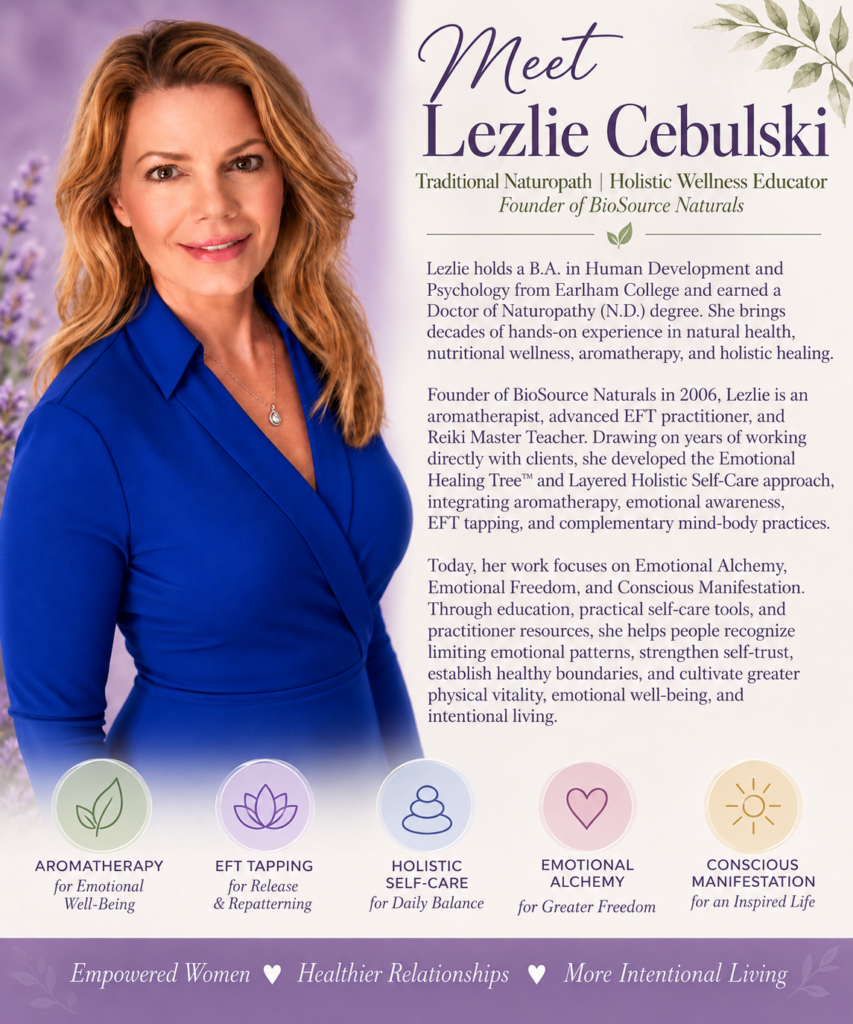
Lezlie Cebulski is a traditional naturopath, Usui Reiki Ryoho Master Teacher, aromatherapist, EFT practitioner, and holistic wellness practitioner.
With more than 35 years of involvement in health and wellness and over 15 years of private practice experience, she brings a broad background in complementary mind-body and energy-based wellness approaches.
She holds a Doctorate in Naturopathy, a bachelor’s degree in Human Development and Psychology and has practiced EFT Tapping since 2004.
Lezlie completed her Reiki Master Teacher training with Advanced Studies in 2017 and incorporates Reiki into her personalized holistic wellness sessions.
Her approach emphasizes relaxation, emotional balance, individualized care, and practical self-care strategies.
Schedule a Reiki Session in New Boston, Michigan
Whether you are seeking stress relief, emotional renewal, energetic balance, or a peaceful restorative experience, Reiki can be incorporated into your personal wellness routine.
Reiki is available as a stand-alone treatment or combined with other holistic wellness services.
Location: New Boston, Michigan
Practitioner: Lezlie Cebulski, N.D., Usui Reiki Ryoho Master Teacher
View Reiki & Holistic Wellness Session Rates
Contact Holistic Healing & Wellness
Reiki is a complementary relaxation practice. It is not a substitute for medical diagnosis or treatment.