Our thoughts, emotions, beliefs, and physical health are deeply interconnected. What we think influences how we feel, and how we feel can influence the chemistry and functioning of our bodies. Emotional Freedom Techniques (EFT Tapping) offer a gentle mind-body approach to addressing emotional stress, releasing habitual reactions, and developing healthier emotional responses.
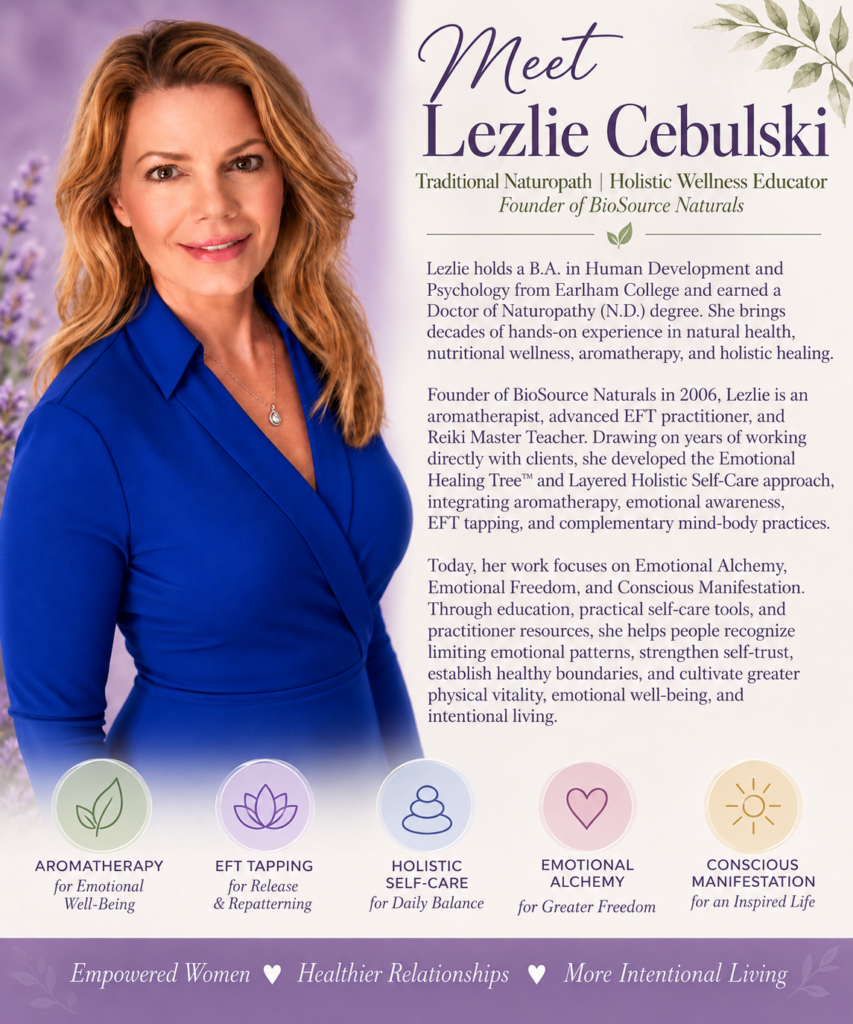
At Holistic Healing & Wellness, Lezlie Cebulski, N.D., EFT-ADV, Reiki Master Teacher combines EFT Tapping with her extensive background in psychology, traditional naturopathy, aromatherapy, and complementary energy-based techniques. Lezlie has practiced EFT since 2004, helping hundreds of clients explore emotional patterns, limiting beliefs, and the relationship between emotional and physical well-being.
What Is Stress, and How Does It Affect Our Health?
We all know that excessive stress can affect our health. But what exactly is stress?
Is stress always caused by circumstances beyond our control, or does the way we interpret and respond to experiences also influence how much stress we feel?
The answer involves both our external circumstances and our internal responses.
Two people can experience a similar event yet respond very differently. One may feel threatened or overwhelmed, while the other experiences the same situation as a manageable challenge.
Our emotional responses are influenced by past experiences, expectations, beliefs, learned behaviors, and the way our nervous system interprets situations.
Over time, repeated responses can become automatic.
We may not always be able to control what happens around us, but we can learn to recognize and change some of our habitual responses.
This is one of the foundational principles behind EFT Tapping and other mind-body wellness techniques.
The Mind-Body Connection: How Thoughts Become Physical Responses
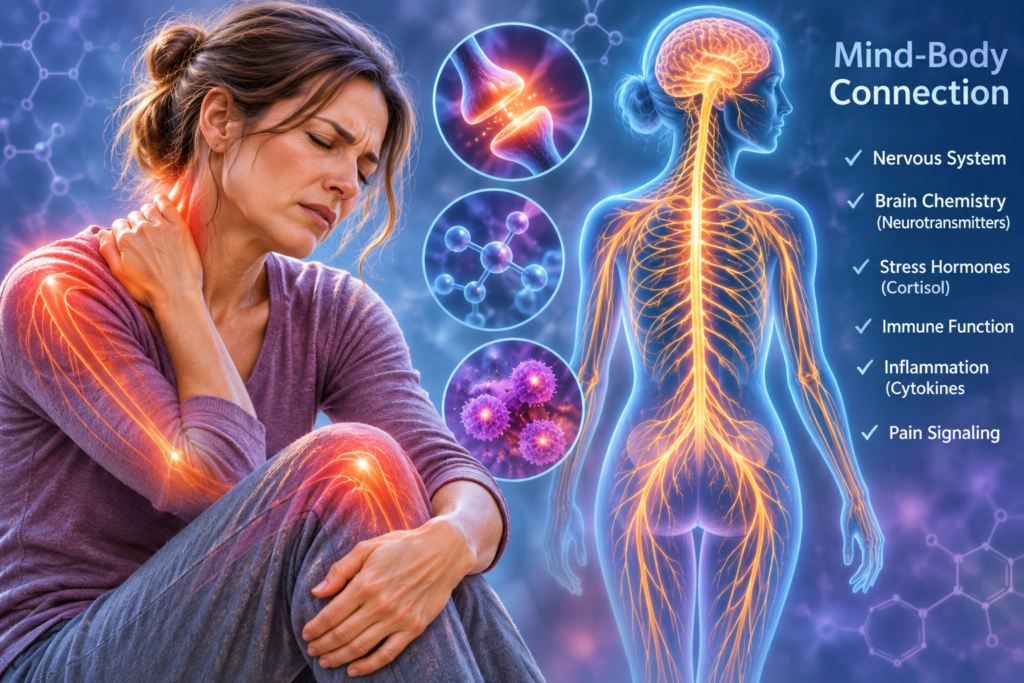
Thoughts are not simply abstract experiences. They can initiate measurable physiological changes throughout the body.
When we perceive a threat, experience anger, feel joyful, or recall an emotional memory, the brain and nervous system communicate with the rest of the body through electrical and chemical signaling.
These processes involve neurotransmitters, neuropeptides, hormones, and other signaling molecules.
Four Key Concepts Behind Emotional Patterns
- Our thoughts influence our emotions. The way we interpret experiences can affect whether we feel fear, anger, sadness, confidence, or joy.
- Emotions influence our body’s chemistry. Emotional responses involve changes in nervous system activity and chemical signaling throughout the body.
- Repeated emotional experiences can become familiar patterns. Over time, habitual thoughts and responses may become deeply ingrained.
- We may unconsciously repeat familiar emotional reactions. Learned expectations and beliefs can influence how we interpret relationships, situations, and new experiences.
For example, someone who repeatedly anticipates rejection may become especially sensitive to criticism. Another person who feels responsible for everyone else’s happiness may experience guilt whenever they establish a boundary.
These responses can become so familiar that they seem like an unavoidable part of our personality.
Yet emotional patterns are not necessarily permanent.
Through awareness, repetition, and mind-body practices, we can begin developing new responses.
Dr. Candace Pert: The Molecules of Emotion
One of the influential researchers who helped expand our understanding of the relationship between emotions and physiology was Dr. Candace Pert, a neuroscientist known for her work involving neuropeptides and their receptors.
Her research contributed to the understanding that chemical messengers play important roles in communication between the brain, nervous system, immune system, and other tissues. Neuropeptides are signaling molecules involved in numerous physiological processes, including stress responses, pain perception, appetite, and emotional regulation.
Pert’s work helped popularize the concept that emotions are not experienced only in the brain but involve complex interactions throughout the body.
Your Psychology Influences Your Biology
Consider what happens when you experience fear or anger. Your heart rate may increase, muscles may tighten, breathing may change, and stress-related hormones may be released. When you feel calm and secure, your body may shift toward a more relaxed physiological state.
These responses demonstrate how closely emotional experiences and physical functioning are connected.
We cannot see a thought, but we can observe many of the physiological changes associated with it.
The relationship also works in the opposite direction. Sleep, nutrition, movement, breathing, pain, and physical health can influence how we feel emotionally. This ongoing communication helps explain why a holistic approach considers both emotional and physical well-being.
Can We Become Accustomed to Negative Emotions?
Many people recognize recurring emotional patterns in their lives. Perhaps you repeatedly feel responsible for solving everyone else’s problems. Maybe you expect rejection, anticipate conflict, or become anxious whenever circumstances are uncertain.
Some people describe these experiences as being addicted to an emotion.
Although emotional habits are not necessarily addictions in the medical sense, repeated emotional experiences can strengthen familiar patterns of thinking and responding.
Our brains learn through repetition.
When certain thoughts, interpretations, and behaviors occur frequently, they can become increasingly automatic. This is related to neuroplasticity, the brain’s ability to change through learning and experience. The encouraging implication is that learned patterns can also be modified.
We can begin recognizing emotional triggers, questioning longstanding beliefs, and practicing different responses.
EFT Tapping is one complementary technique that can be incorporated into this process of emotional repatterning.
How EFT Tapping Helps Repattern Emotional Responses
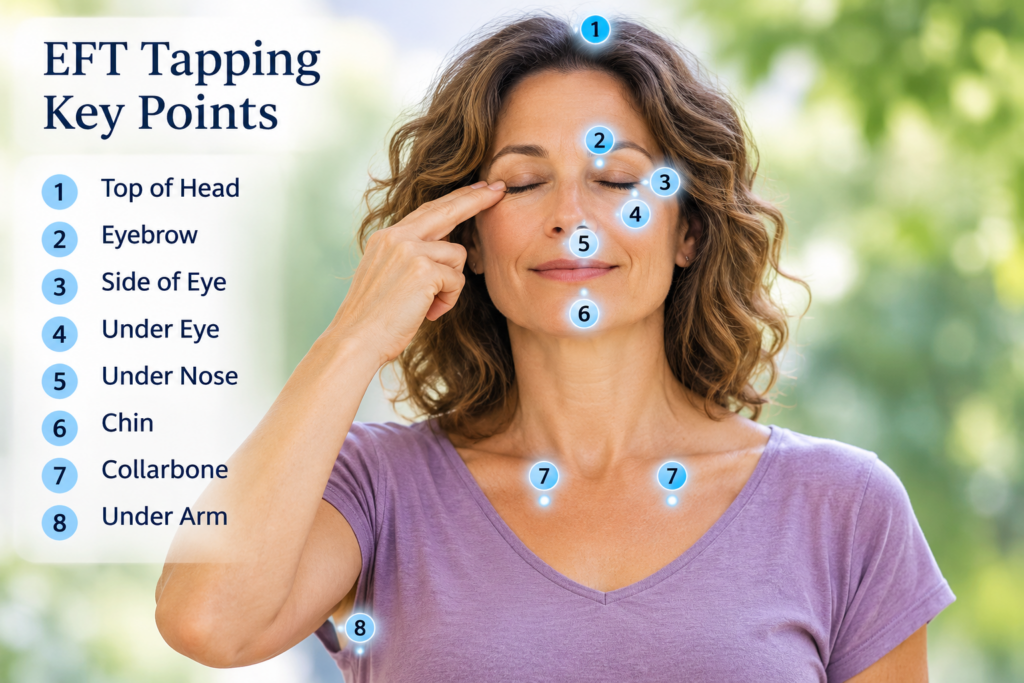
Emotional Freedom Techniques were developed by Gary Craig in the 1990s and are based partly on concepts from traditional Chinese meridian theory. The technique involves gently tapping specific points on the face and upper body while focusing on an emotion, belief, memory, or stressful situation.
EFT is sometimes described as emotional acupuncture without needles.
Within traditional energy psychology, tapping is understood as a way to address disruptions in the body’s energy system associated with emotional distress.
One of the foundational statements of traditional EFT is:
“The cause of all negative emotions is a disruption in the body’s energy system.” — Gary Craig
This statement describes EFT’s original energetic philosophy.
Modern research has also explored EFT through psychological and physiological perspectives, including focused attention, exposure to emotional material, cognitive reframing, and calming somatic stimulation.
What Happens During EFT Tapping?
During an EFT session, an individual typically:
- Identifies a stressful thought, emotion, memory, or limiting belief.
- Notices the emotional intensity associated with the concern.
- Develops a tapping statement acknowledging the feeling.
- Gently taps a sequence of traditional EFT points.
- Continues focusing on the emotional issue while tapping.
- Observes changes in emotional intensity and physical sensations.
- Repeats or adjusts the sequence as needed.
Some individuals notice that an emotionally charged thought becomes less upsetting as they continue tapping.
Others experience a shift in perspective, greater relaxation, or increased awareness of an underlying belief.
Over time, EFT can become a practical self-care technique for interrupting familiar stress responses and exploring healthier emotional patterns.
EFT Tapping, the Nervous System & Stress Hormones
One of the most interesting areas of EFT research involves the body’s physiological stress response.
When we experience stress, the hypothalamic-pituitary-adrenal (HPA) axis helps regulate the release of cortisol and other stress-related hormones.
Cortisol plays important roles in metabolism, immune regulation, and the body’s response to challenges.
However, prolonged or poorly regulated stress can contribute to difficulties involving sleep, mood, concentration, and physical well-being.
Researchers have investigated whether EFT Tapping may help reduce emotional distress and influence measurable stress markers.
Research on EFT Tapping
Studies have reported several encouraging findings:
- Cortisol: Some clinical studies have observed reductions in cortisol following EFT sessions. An early study reported approximately a 24% reduction after a one-hour EFT session, compared with smaller changes in comparison groups.
- Anxiety and Stress: Clinical studies and reviews have reported improvements in self-reported anxiety and psychological distress.
- Cravings: Research has explored EFT for food cravings and emotionally influenced eating behaviors.
- PTSD Symptoms: Some studies have reported reductions in trauma-related symptoms following structured EFT programs.
- Gene Expression: Preliminary research has investigated changes in gene expression following EFT sessions, although these findings do not establish that EFT changes a person’s DNA sequence or produces lasting genetic effects.
- Brain Activity: Emerging neuroimaging research has explored changes in brain activity associated with EFT and emotional processing.
These findings have contributed to growing interest in EFT as a complementary mind-body approach.
Research continues to investigate the specific contribution of tapping, the proposed meridian mechanisms, and the durability of reported benefits.
Watch: EFT Tapping Research & Benefits
TEDxRobina — EFT Tapping
https://www.youtube.com/watch?v=0Vu0Tibt1bQ
This presentation discusses research and practical applications of EFT Tapping, including stress, cravings, and emotional wellness.
Emotional Stress, Physical Symptoms & the Mind-Body Relationship
Emotional stress can have a significant influence on physical well-being.
For example, prolonged stress may contribute to:
- Muscle tension and headaches.
- Changes in digestive comfort.
- Sleep disturbances.
- Fatigue.
- Increased pain sensitivity.
- Changes in appetite.
- Difficulty concentrating.
- Irritability and emotional exhaustion.
These effects illustrate why emotional wellness deserves attention as part of an overall health strategy.
Within traditional energy psychology, unresolved emotional experiences are believed to influence the body’s energetic balance.
Lezlie incorporates this perspective into her holistic practice while also considering the recognized connections among emotional stress, nervous system activity, lifestyle, and physical health.
Addressing emotional patterns can be an important part of caring for the whole person – body, mind, and spirit.
EFT can be incorporated into a broader wellness approach alongside appropriate medical care, nutrition, restorative sleep, movement, and other stress-management techniques.
Exploring the Subconscious Beliefs Behind Emotional Patterns
Sometimes our strongest emotional reactions are connected with beliefs that developed long before the current situation.
Consider these examples:
Fear of Rejection
A person may unconsciously expect criticism or abandonment, even when a situation does not objectively indicate either outcome.
Over-Responsibility
Someone may feel compelled to care for everyone else while neglecting personal needs.
Low Self-Worth
A longstanding belief of not being good enough may influence relationships, professional confidence, and decision-making.
Fear of Success or Failure
Past experiences may contribute to hesitation, procrastination, or self-doubt.
Difficulty Letting Go
Resentment, guilt, grief, or disappointment may continue to influence emotional reactions long after an event has passed.
EFT offers a structured way to focus on these emotional themes while practicing a calming physical technique.
Lezlie combines her extensive EFT experience with intuitive exploration and, when desired, optional traditional muscle testing to help clients reflect on emotional patterns and beliefs.
Muscle testing is used as a complementary exploratory technique rather than a scientifically validated method of identifying subconscious beliefs.
Lezlie’s Personalized Approach to EFT Tapping
Lezlie Cebulski, N.D., EFT-ADV, Reiki Master Teacher has practiced EFT Tapping since 2004 and has worked with hundreds of clients.
Her background includes a Doctorate in Naturopathy and a bachelor’s degree in Human Development and Psychology, traditional naturopathic education, aromatherapy, Reiki, and decades of experience with holistic mind-body wellness.
Rather than relying exclusively on standard tapping scripts, Lezlie personalizes EFT sessions to the emotional themes and concerns each client wishes to explore.
Her approach may incorporate:
- EFT Tapping for emotional awareness and repatterning.
- Intuitive exploration of recurring emotional themes.
- Optional traditional muscle testing.
- Aromatherapy and essential oils.
- Breathing and somatic relaxation.
- Affirmations and journaling.
- Nutritional and lifestyle wellness considerations.
The objective is to help clients recognize emotional patterns, develop greater self-awareness, and learn practical techniques they can continue using independently.
EOTT™: Essential Oil Tapping Technique
Combining EFT Tapping with Aromatherapy
Lezlie developed her own approach to combining EFT with essential oils, which she calls EOTT™ – Essential Oil Tapping Technique.
This method integrates the traditional EFT tapping sequence with selected essential oils and aromatherapy blends associated with emotional wellness themes. Aromas are processed through the olfactory system, which is closely connected with brain regions involved in memory and emotion.
By pairing a personally stimulating aromas with focused emotional awareness and tapping, EOTT™ creates a layered sensory and mind-body self-care experience. Lezlie has observed that this makes emotional release and repatterning an easier process and likens it to how a weed is more easily pulled after a good rain.
Lezlie may recommend essential oil blends associated with:
- Confidence and self-esteem.
- Grief and emotional openness.
- Forgiveness and compassion.
- Stress and emotional overwhelm.
- Personal boundaries.
- Grounding and relaxation.
- Releasing longstanding emotional patterns.
As the founder of BioSource Naturals, Lezlie has written extensively about combining aromatherapy with EFT and other complementary emotional wellness practices.
Read Lezlie’s Guide to Combining Essential Oils with EFT Tapping
Continue Learning: EFT Tapping & Emotional Wellness
Lezlie has developed an extensive collection of educational articles, practical exercises, and self-help resources through the BioSource Naturals Holistic Learning Center.
Topics include emotional healing, EFT Tapping, subconscious beliefs, aromatherapy, personal boundaries, forgiveness, and mind-body wellness.
These resources complement her private EFT consultations and provide additional opportunities to practice emotional self-care at home.
Explore the BioSource Naturals Holistic Learning Center
Frequently Asked Questions
Can EFT Tapping change emotional patterns?
EFT can be used as a complementary technique for exploring habitual emotional responses and practicing new ways of responding to stressful situations. Some individuals report meaningful changes in emotional intensity and perspective.
How are emotions connected to physical health?
Emotions involve nervous system activity, hormones, neurotransmitters, and other physiological processes. Chronic stress can influence sleep, digestion, muscle tension, and other aspects of physical well-being.
What are neuropeptides?
Neuropeptides are chemical messengers that help cells communicate. They participate in many functions, including pain perception, stress responses, appetite, and emotional regulation.
Can we become addicted to certain emotions?
Repeated emotional experiences can develop into familiar habits and learned responses. Although this is not necessarily a medical addiction, emotional patterns may become automatic through repetition and conditioning.
Does EFT Tapping reduce cortisol?
Some clinical studies have reported cortisol reductions following EFT sessions. However, findings vary, and further research is needed to determine the consistency and long-term significance of these effects.
What is emotional repatterning?
Emotional repatterning refers to recognizing familiar thoughts, beliefs, and emotional reactions and developing alternative responses through awareness, practice, and learning.
What is EOTT™?
EOTT™ stands for Essential Oil Tapping Technique, Lezlie’s approach to combining EFT Tapping with aromatherapy and personalized emotional wellness practices.
Can I learn EFT Tapping to practice at home?
Yes. Basic EFT tapping sequences can be learned and incorporated into a personal relaxation and emotional self-care routine. Lezlie can provide individualized guidance and tapping statements.
Schedule a Personalized EFT Tapping Consultation
Emotional patterns can influence how we experience relationships, stress, work, personal boundaries, and everyday life.
Learning to recognize these patterns is an important first step toward developing healthier responses.
Lezlie offers individualized EFT Tapping and complementary mind-body wellness consultations in New Boston, Michigan, and virtually.
Learn More About Lezlie Cebulski
Contact Holistic Healing & Wellness
EFT Tapping is a complementary mind-body wellness technique. Research into its mechanisms and effectiveness is ongoing. It is not a substitute for appropriate medical or mental health treatment.